Decreasing Round-Trip Latency in Advanced Automated Communication Cycles

Scaling Proxy Networks for Huge Automation in 2026
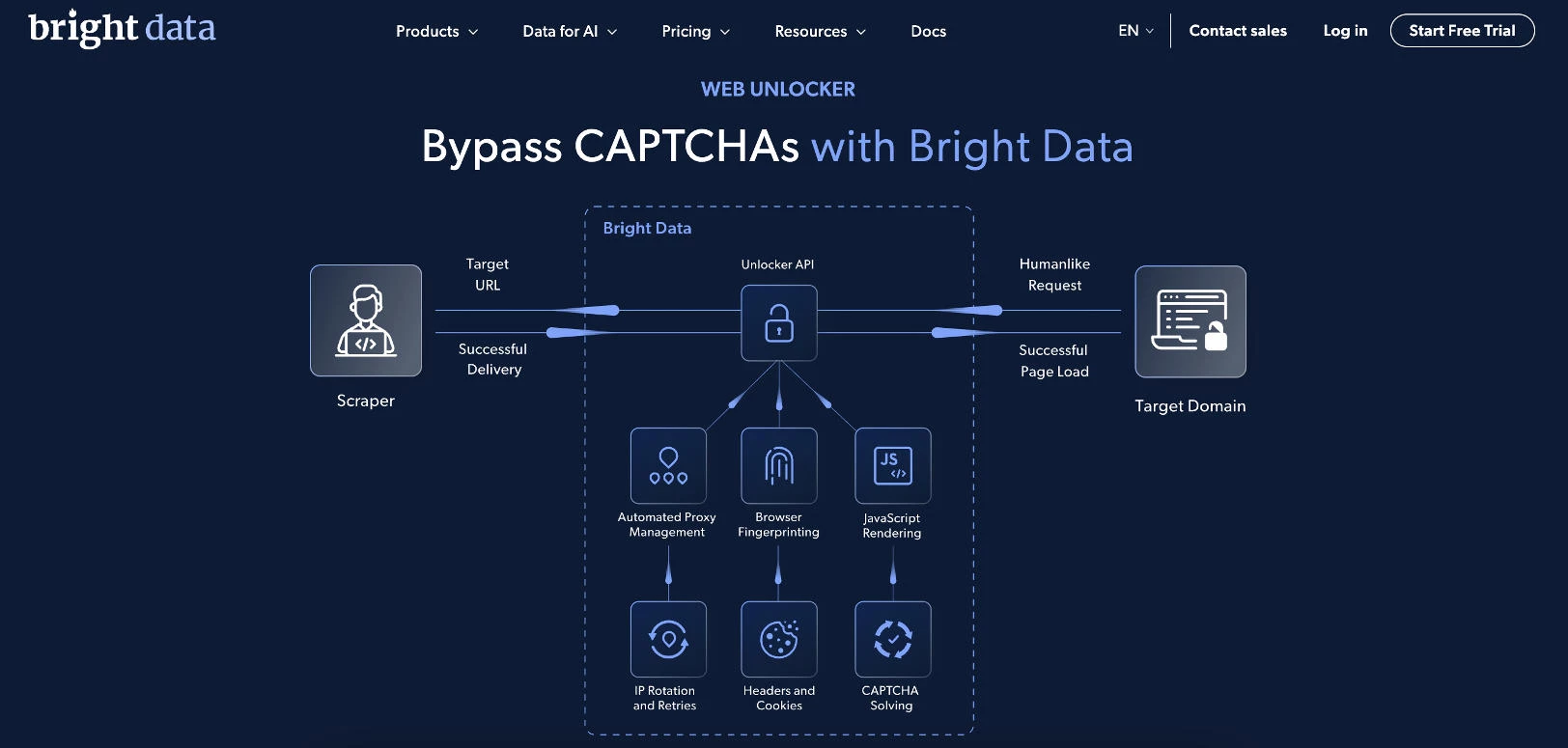
High-volume automation has reached a phase where standard information center connections no longer be adequate for a lot of data gathering jobs. By 2026, the complexity of site security has actually forced an overall migration toward property proxy networks. These networks, made up of IP addresses assigned by Web Company (ISPs) to real homeowners, use the legitimacy needed to bypass sophisticated anti-bot procedures. When managing tools that carry out millions of requests per hour, the focus shifts from simple connection to the orchestration of countless individual exit nodes around the world.
Running at this scale needs a deep understanding of how residential IPs behave under pressure. Unlike data center IPs, which are fixed and hosted in controlled environments, property IPs are unforeseeable. A home user may switch off their router, or a mobile phone might move in between cell towers, triggering a connection to drop. For high-volume tools, the management layer should account for this volatility. Engineering groups now focus on systems that can discover a failing node in milliseconds and reroute traffic to a fresh IP without disrupting the session circulation. This layer of abstraction is what permits automation to function at a level that appears indistinguishable from human browsing behavior.
Success in 2026 counts on the capability to simulate local patterns. Websites have actually ended up being progressively delicate to geographic inconsistencies. If an automation tool attempts to access a localized service in Tokyo using a London-based IP, the request is typically flagged or served irrelevant data. For that reason, the management of these networks involves accurate targeting. High-volume tools must be set up to demand IPs from specific areas, cities, or perhaps particular ASNs (Autonomous System Numbers) to keep the impression of local presence. Growth in data-heavy industries typically depends on Asia Virtual Solutions Solution to bypass restrictive filters and guarantee data precision throughout different markets.
The Mechanics of IP Rotation and Sticky Sessions
Picking in between rotating proxies and sticky sessions is a main choice for any network architect. In high-volume environments, rotation is the default state. Each demand is assigned a different IP address, which prevents a single address from collecting adequate demands to set off a rate limit. This is ideal for web scraping where the goal is to pull as much data as possible from a large variety of pages. Rotation can be harmful when an automation tool needs to carry out consecutive actions, such as logging into a portal or navigating a multi-step checkout process.
Sticky sessions resolve this by holding an IP for a set period, frequently varying from 10 to half an hour. In 2026, managing these sessions at scale involves an advanced intermediary-- the proxy gateway. The entrance deals with the logic of keeping the connection alive even if the underlying residential IP goes offline. If the original IP vanishes, the gateway attempts to discover a comparable replacement from the very same service provider and area to lessen the chance of the target site seeing a modification. This perseverance is essential for tools that mimic long-running user sessions where consistency is more vital than pure privacy.
Another consider high-volume management is the overhead of TLS handshakes. Each time a tool links to a brand-new proxy, it must work out a safe and secure connection. When doing this countless times, the latency accumulates, significantly decreasing the workload. Modern management tools in 2026 usage consistent connections to the proxy entrance while turning the exit nodes on the backend. This lowers the time spent on handshakes and permits the automation tool to maintain a high throughput even when the IP addresses are altering quickly.
Managing Bandwidth and Concurrency for Large Workloads
Expense management ends up being a significant obstacle when dealing with residential proxies. Unlike other types of network facilities, property IPs are usually billed by the gigabyte instead of a flat monthly cost. For high-volume tools, a poorly enhanced scraper can rapidly take in thousands of dollars in bandwidth. Supervisors must implement stringent filtering at the tool level to avoid downloading unneeded properties like images, videos, or tracking scripts that do not contribute to the last data set.
Concurrency is the other side of the effectiveness coin. High-volume tools often run countless threads concurrently. Each thread needs its own connection through the proxy network. If the management system is not efficient in managing this concurrency, the threads will experience timeouts or "429 Too Lots of Requests" mistakes from the proxy company itself. To avoid this, lots of companies utilize a dispersed architecture where multiple instances of the automation tool are spread out throughout various cloud suppliers, all funneling into a main proxy management center. Asia Virtual Solutions XEvil Captcha Solution assists engineering groups maintain uptime throughout peak scraping hours by distributing the load and making sure that no single entrance is overwhelmed.
Monitoring these connections in real-time is no longer optional. In 2026, dashboarding tools provide live telemetry on success rates, reaction times, and mistake codes. If the success rate drops listed below a particular threshold, the management system can automatically switch the tool to a different IP pool or a different service provider completely. This multi-provider strategy avoids a single point of failure and makes sure that the automation work continues even if a major proxy service provider experiences a network blackout or a rise in obstructed IPs.
ASN and ISP Targeting for Greater Success Rates
As anti-bot innovation has actually advanced, simply having a property IP is insufficient. Numerous websites now look at the credibility of the ISP and the ASN associated with the address. Some ISPs are understood to host a greater portion of proxy traffic, making them much easier to determine and block. In 2026, advanced management includes choosing "clean" ASNs that have a high track record for hosting real residential users. This level of granularity enables tools to reach targets that were formerly thought about unmaskable.
Mobile domestic proxies have likewise end up being a staple for high-volume tools. These IPs, originating from 5G and 6G networks, are particularly valuable due to the fact that countless real users frequently share a single mobile IP through a procedure called CGNAT. Sites are hesitant to block these IPs because doing so would lead to collateral damage, obstructing hundreds of genuine users in addition to the bot. While more expensive, integrating a percentage of mobile IPs into a bigger property swimming pool can significantly increase the overall success rate of an enormous automation task.
Filtering by connection type is another common strategy. Some tools perform much better when restricted to fiber or cable television connections, which offer lower latency compared to satellite or mobile data. By fine-tuning the IP choice requirements, managers can enhance for speed where it is required and for stealth where detection is the main issue. This balanced approach is the trademark of a fully grown network infrastructure in the current year.
Security and Ethical Considerations in Proxy Management
Managing domestic networks likewise requires a concentrate on security and compliance. In 2026, the industry has approached more transparent sourcing of IPs. It is necessary to make sure that the property nodes in a pool become part of an opt-in network where users understand their bandwidth is being shared. For the business utilizing the tools, this lowers the threat of being connected with dishonest practices or legal obstacles regarding unauthorized network access.
The information sent through these proxies must be handled thoroughly. High-volume tools often deal with delicate info, and the proxy management layer should consist of encryption and protected authentication to prevent information leaks. Using encrypted tunnels between the automation tool and the proxy entrance ensures that even if a node in the residential network is compromised, the information remains unattainable to the IP owner. This layer of security is basic practice for any organization running high-stakes automation jobs in 2026.
Finally, the future of proxy management is favoring AI-driven optimization. Systems are now being deployed that can anticipate when a specific website will change its bot detection patterns. These systems then immediately change the headers, fingerprinting, and IP rotation frequency of the automation tools to stay ahead of the changes. This proactive management lowers the requirement for manual intervention and permits high-volume tasks to run autonomously for weeks or months at a time, supplying a constant stream of data or actions without the constant requirement for fixing.
The shift from manual proxy lists to vibrant, handled domestic networks has changed the way organizations approach automation. By focusing on the details of session management, geographical targeting, and cost-efficiency, organizations can keep huge workloads that were impossible just a couple of years ago. As the technology continues to evolve, the distinction between human and automated traffic will likely become even thinner, making the function of the proxy supervisor a central figure in the digital economy.