Ethical Factors To Consider for Scientist Establishing Automated Evaluating Tools
The Evolution of Border Defenses in 2026
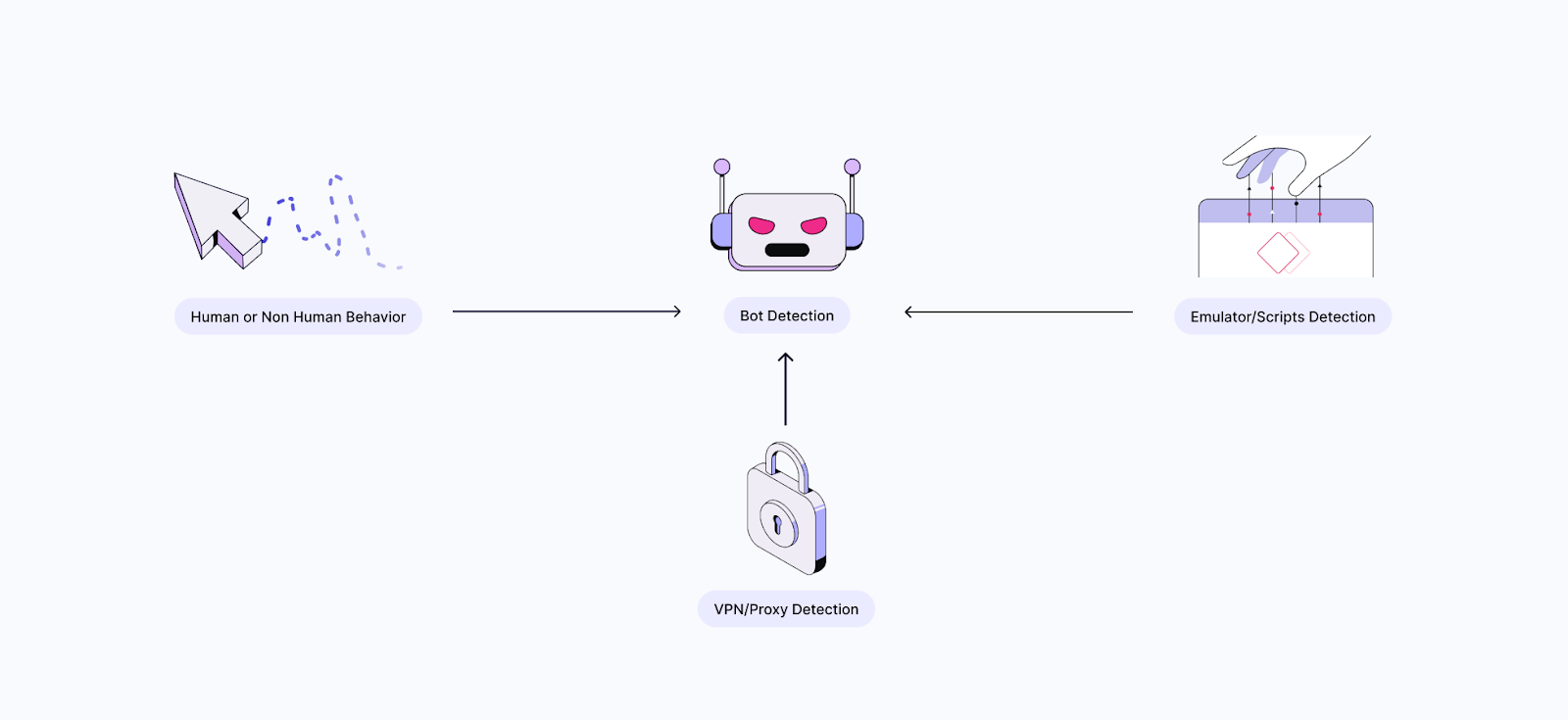
Security procedures have undergone an enormous shift over the last twenty-four months. By early 2026, the traditional techniques of comparing a human user and an automated script have actually mostly moved far from simple puzzles. Fixed images and distorted text no longer supply the barrier they when did. Instead, the industry has moved toward behavioral biometrics and environmental telemetry. These systems analyze how a user moves their mouse, the pressure used to a touchscreen, and even the micro-fluctuations in typing speed to create an unique signature.This shift has produced a considerable obstacle for security scientists. To evaluate the resilience of these systems, automated research tools have had to progress. Ethical researchers now discover themselves in a position where they must simulate human behavior with scary precision simply to examine if a defense works. This arms race raises questions about the line between verifying security and producing tools that could be used for unapproved access. The core of the debate in 2026 centers on whether the advancement of bypass strategies is a necessary part of the defense cycle or a threat that outweighs the advantages.
Advanced Vision Systems and OCR Capabilities
Optical Character Recognition (OCR) has moved far beyond acknowledging flattened text. In 2026, vision models use context-aware neural networks that can translate 3D spatial puzzles and multi-layered visual noise that would have stumped even the finest systems 2 years back. Modern bot detection typically relies on visual challenges that need a "sound judgment" understanding of physics or logic-- jobs that were formerly believed to be the exclusive domain of human intelligence.Researchers typically focus on these vision systems to identify flaws in how AI-based gatekeepers analyze data. For example, some security teams have found that by injecting specific patterns of adversarial sound into a visual challenge, they can force the detection model to misclassify a bot as a confirmed user. This type of testing is essential for companies that rely on Asia Virtual Solutions Beta to keep the integrity of their user databases. Without these strenuous tension tests, a platform might remain susceptible to high-speed information harvesting or account takeovers.
The Ethical Ramifications of Behavioral Mimicry
When a script can completely replicate the irregular and non-linear movement of a human hand, the principle of "evidence of personhood" starts to collapse. Ethical scientists argue that by releasing findings on how to bypass behavioral biometrics, they are requiring the industry to find better, more privacy-preserving methods to verify identity. Critics, however, recommend that these strategies supply a blueprint for destructive stars to scale their operations.The ethical structure for 2026 focuses on the idea of "accountable disclosure." When a scientist finds a method to bypass a high-tier detection system, the basic procedure is to inform the supplier and permit a removal period before the findings go public. The speed of automated research today indicates that a bypass discovered on Monday may be obsolete by Friday as AI-driven defense systems patch themselves in real-time. This fast cycle leaves little room for standard disclosure timelines.
The Commoditization of Bypass Tools
One of the most pressing concerns in 2026 is the ease of access of sophisticated bypass technology. Strategies that were once the domain of state-sponsored stars are now available in easy-to-use software packages. This democratization of power indicates that even small scientists can carry out top-level security audits. It also indicates that the barriers to entry for less ethical pursuits have actually dropped significantly.Modern security specialists often prioritize Asia Virtual Solutions Beta when building out their protective facilities. They need to presume that any bot detection system they put in place is already being examined by countless automated scripts globally. The focus has shifted from "can we stop the bots?" to "how can we make it too expensive for the bots to continue?" Economics has actually become a main pillar of security ethics. If a bypass needs too much computational power, the motive for the attack frequently vanishes.
Personal Privacy Concerns and Ecological Telemetry
To catch advanced bots in 2026, numerous sites have actually turned to aggressive information collection. They keep track of internet browser extensions, hardware setups, and network latency to find anomalies. This has actually sparked a backlash from personal privacy supporters who argue that the "war on bots" has actually turned the typical web user into a constant monitoring target. Ethical security research should now represent the privacy of the users they are attempting to protect.Researchers are trying to find ways to confirm human presence without scraping a mountain of personal information. Some 2026 startups are explore zero-knowledge proofs for bot detection, where a user can prove they are human without exposing any recognizing information or behavioral data. Checking these privacy-focused systems requires a different set of bypass methods-- ones that focus on the reasoning of the evidence instead of the simulation of the person.
Current Obstacles in Automated Research Study
- Simulation of device-level entropy to prevent fingerprinting.
- Handling the cost of GPU-heavy OCR procedures versus high-volume targets.
- Browsing the legal gray areas of "intent" in automated screening.
- The increasing prevalence of server-side behavioral analysis that overlooks client-side scripts.
The Function of Third-Party Auditing
Independent firms have actually ended up being the gatekeepers of ethical requirements in 2026. Rather than depending on internal testing, lots of companies work with external teams to attempt to bypass their own bot detection. This develops a regulated environment where bypass strategies can be utilized safely. These audits supply a "seal of approval" that tells users a website is both protected and reasonable in its treatment of automated traffic.
The "Bot vs. Bot" Reality of 2026
We have actually reached a point where the web is largely a conversation in between different AI agents. One representative attempts to protect a portal, while another attempts to acquire entry for research study, indexing, or data analysis. The principles of this interaction are complicated. If an online search engine bot needs to bypass a heavy-handed detection script to index public info, is that an ethical bypass? Many market experts concur that the context of the gain access to is more vital than the method of entry.Security researchers are now establishing "courteous" bypass tools. These are scripts that determine themselves to the server however utilize innovative OCR or behavioral simulation to bypass barriers that were inadequately carried out and are blocking legitimate research. This transparency is a crucial pattern in 2026, as it moves the discussion away from "hiding" and toward "cooperation" between automated systems.
Techniques for Resilient Defense
- Carrying out rate limiting based upon economic cost instead of simply IP address.
- Using turning challenge types that require bots to switch between various vision designs.
- Depending on historic reputation data instead of just the current session's behavior.
- Encouraging making use of standardized "Research study Headers" to enable ethical automation.
Looking Toward 2027
The stress between accessibility and security shows no signs of relieving. As vision designs end up being more efficient, the cost of resolving a visual obstacle will drop even further. The ethical security researcher of the future will likely focus more on the "logic" layer of applications rather than the "entry" layer. If the bot detection can be bypassed by a script operating on a mobile phone, the defense is efficiently non-existent in the 2026 environment.The focus is now on producing a digital environment where automation is handled with nuance. Total exclusion of bots is neither possible nor desirable. Rather, the objective is to create systems that can compare a researcher's script and a destructive attack. This needs a level of transparency and ethical consistency that the market is still struggling to define. As we move more detailed to 2027, the discussion between those who build the walls and those who find the cracks will remain the most critical part of the cybersecurity narrative.