Next-Generation OCR: Beyond Basic Character Acknowledgment Performance
Scaling Proxy Networks for Enormous Automation in 2026
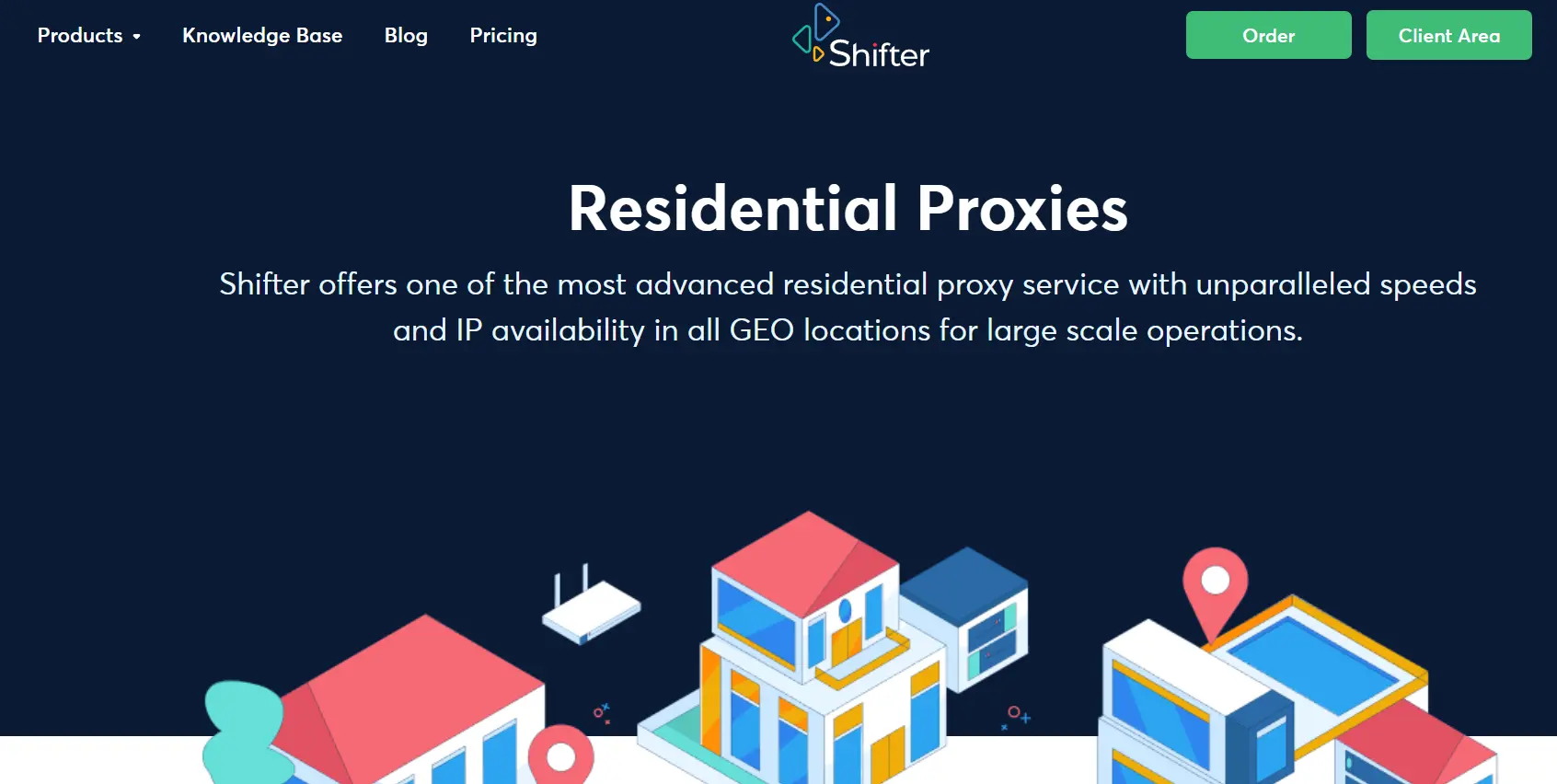
High-volume automation has reached a stage where standard data center connections no longer be sufficient for the majority of information collecting jobs. By 2026, the complexity of website security has forced a total migration toward domestic proxy networks. These networks, composed of IP addresses appointed by Internet Company (ISPs) to real homeowners, offer the authenticity required to bypass advanced anti-bot procedures. When handling tools that execute millions of requests per hour, the focus shifts from easy connectivity to the orchestration of thousands of individual exit nodes around the world.
Operating at this scale needs a deep understanding of how property IPs act under pressure. Unlike information center IPs, which are fixed and hosted in regulated environments, domestic IPs are unforeseeable. A home user may switch off their router, or a mobile phone might move between cell towers, causing a connection to drop. For high-volume tools, the management layer must represent this volatility. Engineering teams now focus on systems that can find a stopping working node in milliseconds and reroute traffic to a fresh IP without disrupting the session circulation. This layer of abstraction is what permits automation to work at a level that appears identical from human browsing behavior.
Success in 2026 depends on the capability to imitate regional patterns. Websites have become increasingly conscious geographic disparities. If an automation tool attempts to access a localized service in Tokyo using a London-based IP, the request is often flagged or served unimportant information. Therefore, the management of these networks involves exact targeting. High-volume tools must be set up to demand IPs from particular regions, cities, or even particular ASNs (Autonomous System Numbers) to maintain the illusion of regional existence. Development in data-heavy industries frequently depends upon Asia Virtual Solutions Beta to bypass restrictive filters and guarantee information precision throughout different markets.
The Mechanics of IP Rotation and Sticky Sessions
Picking in between rotating proxies and sticky sessions is a primary choice for any network architect. In high-volume environments, rotation is the default state. Each demand is designated a different IP address, which prevents a single address from collecting sufficient demands to set off a rate limit. This is ideal for web scraping where the objective is to pull as much information as possible from a vast array of pages. Nevertheless, rotation can be destructive when an automation tool needs to carry out sequential actions, such as logging into a portal or browsing a multi-step checkout procedure.
Sticky sessions address this by holding an IP for a set period, often varying from 10 to half an hour. In 2026, handling these sessions at scale involves a sophisticated intermediary-- the proxy gateway. The gateway deals with the reasoning of keeping the connection alive even if the underlying residential IP goes offline. If the initial IP vanishes, the gateway tries to discover a comparable replacement from the very same company and area to decrease the opportunity of the target website noticing a modification. This persistence is crucial for tools that imitate long-running user sessions where consistency is more vital than pure anonymity.
Another aspect in high-volume management is the overhead of TLS handshakes. Each time a tool connects to a new proxy, it should negotiate a secure connection. When doing this countless times, the latency includes up, significantly decreasing the work. Modern management tools in 2026 usage consistent connections to the proxy entrance while rotating the exit nodes on the backend. This minimizes the time invested in handshakes and allows the automation tool to preserve a high throughput even when the IP addresses are changing rapidly.
Managing Bandwidth and Concurrency for Big Workloads
Cost management ends up being a considerable difficulty when dealing with property proxies. Unlike other types of network facilities, property IPs are almost always billed by the gigabyte instead of a flat monthly cost. For high-volume tools, an inadequately enhanced scraper can rapidly take in countless dollars in bandwidth. Managers must implement rigorous filtering at the tool level to prevent downloading unneeded properties like images, videos, or tracking scripts that do not add to the final information set.
Concurrency is the other side of the effectiveness coin. High-volume tools often run countless threads simultaneously. Each thread requires its own connection through the proxy network. If the management system is not efficient in managing this concurrency, the threads will experience timeouts or "429 A Lot Of Requests" mistakes from the proxy supplier itself. To avoid this, many companies utilize a distributed architecture where numerous circumstances of the automation tool are spread out across various cloud providers, all funneling into a main proxy management hub. Asia Virtual Solutions XEvil 6 Beta helps engineering groups maintain uptime during peak scraping hours by dispersing the load and ensuring that no single entrance is overwhelmed.
Keeping an eye on these connections in real-time is no longer optional. In 2026, dashboarding tools offer live telemetry on success rates, response times, and error codes. If the success rate drops below a particular limit, the management system can immediately change the tool to a various IP swimming pool or a different company entirely. This multi-provider technique avoids a single point of failure and ensures that the automation work continues even if a major proxy service provider experiences a network blackout or a rise in blocked IPs.
ASN and ISP Targeting for Higher Success Rates
As anti-bot innovation has advanced, simply having a property IP is insufficient. Numerous websites now take a look at the reputation of the ISP and the ASN related to the address. Some ISPs are known to host a higher percentage of proxy traffic, making them much easier to identify and block. In 2026, sophisticated management involves choosing "tidy" ASNs that have a high reputation for hosting real domestic users. This level of granularity allows tools to reach targets that were previously considered unmaskable.
Mobile domestic proxies have likewise become a staple for high-volume tools. These IPs, originating from 5G and 6G networks, are particularly valuable because countless genuine users often share a single mobile IP through a process called CGNAT. Websites are reluctant to block these IPs due to the fact that doing so would lead to collateral damage, blocking hundreds of legitimate users along with the bot. While more pricey, integrating a percentage of mobile IPs into a larger domestic swimming pool can drastically increase the total success rate of a massive automation task.
Filtering by connection type is another typical technique. Some tools carry out better when limited to fiber or cable connections, which provide lower latency compared to satellite or mobile data. By fine-tuning the IP selection criteria, managers can optimize for speed where it is needed and for stealth where detection is the primary concern. This balanced technique is the hallmark of a fully grown network infrastructure in the existing year.

Security and Ethical Considerations in Proxy Management
Handling property networks also requires a concentrate on security and compliance. In 2026, the market has moved towards more transparent sourcing of IPs. It is essential to ensure that the residential nodes in a pool become part of an opt-in network where users understand their bandwidth is being shared. For business utilizing the tools, this minimizes the risk of being related to dishonest practices or legal challenges concerning unauthorized network access.
The data sent through these proxies should be dealt with thoroughly. High-volume tools often deal with sensitive information, and the proxy management layer should consist of file encryption and safe and secure authentication to prevent data leakages. Utilizing encrypted tunnels in between the automation tool and the proxy gateway guarantees that even if a node in the property network is compromised, the data remains unattainable to the IP owner. This layer of security is basic practice for any organization running high-stakes automation jobs in 2026.
Lastly, the future of proxy management is favoring AI-driven optimization. Systems are now being released that can anticipate when a certain website is about to alter its bot detection patterns. These systems then instantly change the headers, fingerprinting, and IP rotation frequency of the automation tools to remain ahead of the changes. This proactive management lowers the need for manual intervention and enables high-volume jobs to run autonomously for weeks or months at a time, providing a consistent stream of information or actions without the consistent need for repairing.
The shift from manual proxy lists to vibrant, managed property networks has altered the way companies approach automation. By focusing on the information of session management, geographical targeting, and cost-efficiency, companies can maintain massive workloads that were difficult just a few years ago. As the technology continues to progress, the difference in between human and automated traffic will likely become even thinner, making the role of the proxy supervisor a main figure in the digital economy.