The Technical Evolution of AI-Based Security Systems in 2026

High-Volume Traffic Circulation for modern automation
Automation reached a new peak in 2026 as companies scaled up their data extraction and network jobs. Managing 10 million requests per minute requires more than just a single server or an easy proxy list. It requires an advanced method to traffic distribution. When managing enormous botnets or distributed scrapers, the main objective is to make sure that no single node ends up being a traffic jam or a target for detection. This is where load balancing steps in, serving as the traffic controller for countless simultaneous connections throughout a worldwide network.The shift towards dispersed architectures in 2026 has actually changed how engineers see automation. Instead of a central command-and-center model, modern-day systems utilize decentralized nodes that interact through a smart middle layer. This layer decides which proxy to utilize, which area to route through, and how to handle an abrupt surge in target website defenses. Without this control, a massive scraping operation would collapse under its own weight, either through self-inflicted denial-of-service or by setting off aggressive anti-bot filters.Managing the flow of demands starts with comprehending the difference in between Layer 4 and Layer 7 balancing. In the context of scraping, Layer 7 (application layer) balancing is frequently better due to the fact that it permits the system to make choices based upon the content of the request. For example, if a scraper is targeting a specific product page, the balancer can route that demand to a proxy that has actually just recently successfully accessed that specific domain. Organizations typically look toward Asia Virtual Solutions Update to manage these inbound information streams. This level of granularity ensures that the network remains efficient and minimizes the number of failed demands.
Technical Requirements for high-scale operations
Scalability in 2026 depends upon the ability to include or remove capability on the fly. When a scraper begins an enormous crawl of a retail website during a holiday sale, the facilities should broaden instantly. Conventional load balancers often struggle with the quick connection churn connected with botnets. Each bot may just stay active for a few seconds before rotating its IP or shutting down to avoid detection. This continuous starting and stopping of connections puts tremendous pressure on the stabilizing software.To counter this, numerous designers have turned to "Anycast" networking. This enables numerous servers to share the very same IP address, with the network routing traffic to the nearby readily available node. In a scraping context, this helps in reducing latency and makes the botnet appear more like genuine, distributed user traffic. When a bot in Tokyo makes a request, it hits a local entry point instead of traveling across the ocean to a main server. This regional routing is a crucial part of staying under the radar of contemporary security systems that search for uncommon geographic traffic patterns.The hardware side of the equation has likewise evolved. Specialized network cards and high-speed memory are now standard for managing the state tables of millions of concurrent sessions. If a balancer misplaces which bot is doing what, the entire scraping run can lose its location, causing replicate information or missed pages. Stability is the most important metric here. Using durable, proven hardware setups enables these networks to keep 99.9% uptime even during peak loads.
Managing Website Defenses via advanced rotation
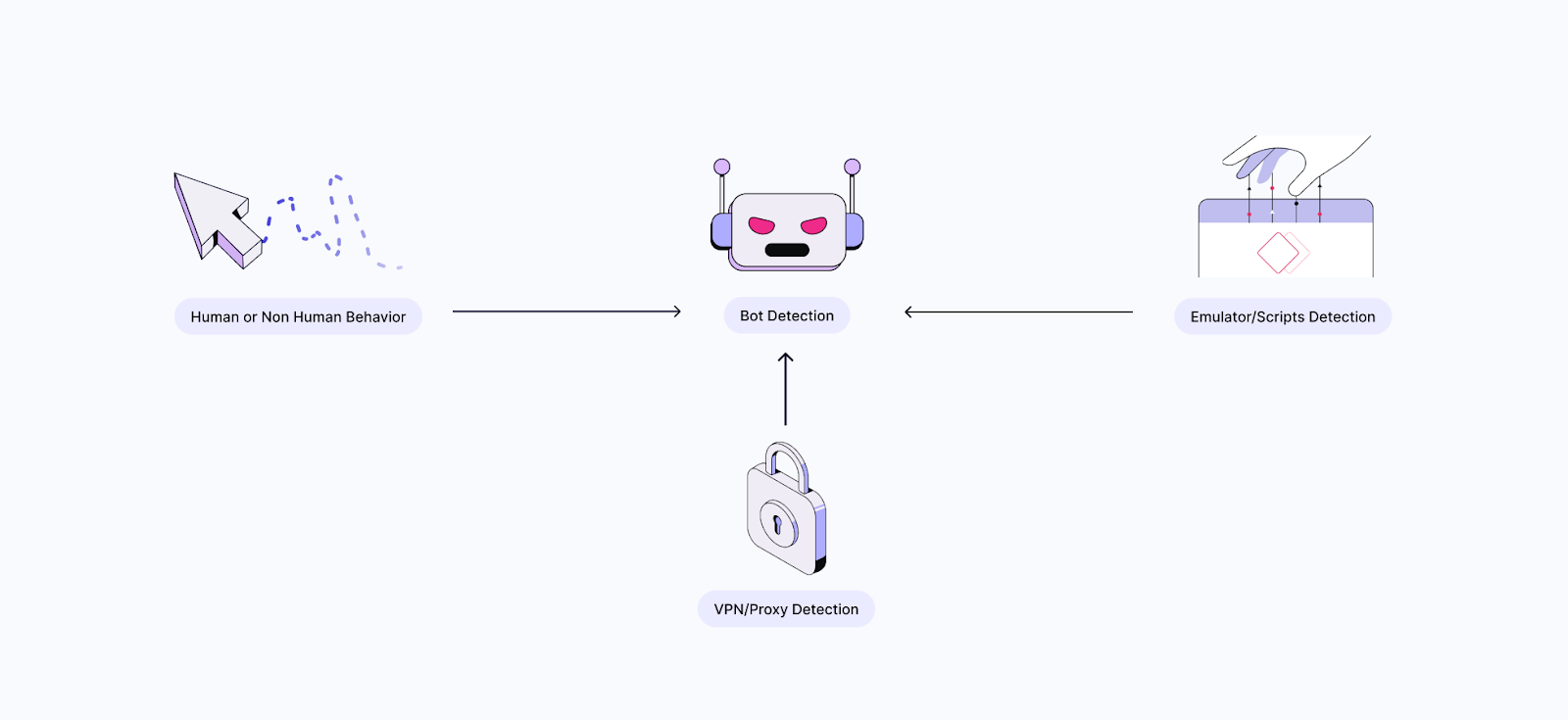
Anti-bot innovation in 2026 is faster and more accurate than ever before. Sites now use behavioral analysis to identify patterns that look "too perfect" or "too fast." Load balancing helps break these patterns by presenting jitter and varied timing into the request flow. A good balancer doesn't just distribute traffic uniformly; it distributes it randomly within specific criteria to imitate human behavior.One of the biggest hurdles is the sudden appearance of a difficulty or a block. When a target website detects suspicious activity, it might provide a short-lived IP ban or reveal a captcha. A clever load balancer discovers these 403 or 429 status codes instantly. It can then immediately pull that specific proxy out of the rotation and replace it with a fresh one. Reliable implementation of Asia Virtual Solutions Update XEvil V5 simplifies the procedure of turning sensitive qualifications. This proactive management prevents the botnet from burning through its whole IP pool in a matter of minutes.Predictive scaling is another feature ending up being typical in 2026. By examining historic data, a balancer can anticipate when a target site is likely to increase its security or when a specific proxy service provider is likely to experience downtime. The system can then shift traffic to more trustworthy paths before the failures actually take place. This keeps the data streaming and lowers the need for manual intervention by the engineering team.
Proxy Management and IP Variety
The heart of any huge scraper is its proxy swimming pool. In 2026, the variety of these proxies is what determines the success of a task. Utilizing just information center IPs is no longer enough for the majority of high-value targets. Instead, networks utilize a mix of domestic, mobile, and data center addresses. The load balancer need to be conscious of the "credibility" of each IP type. Residential IPs are more pricey and slower, so the balancer needs to utilize them sparingly-- just for the most difficult pages.Data center IPs are utilized for the "heavy lifting"-- the initial discovery of URLs or scraping websites with lower security. The balancer acts as a logic gate, deciding which "tier" of proxy to use based upon the complexity of the task. This tiered approach conserves money and preserves the "health" of the domestic IP swimming pool. If a balancer sends a lot of demands through a domestic node, it may get flagged by the ISP, triggering the home user to discover a slowdown and possibly leading to the IP being pulled from the service.Mobile proxies are the most evasive in 2026. They share IPs with thousands of real users, making them nearly difficult to block without also blocking genuine customers. Nevertheless, they are likewise the most limited in regards to bandwidth. A load balancer requires to strictly keep an eye on the information usage on mobile nodes to prevent hitting caps or setting off informs on the mobile carrier's network. This cautious orchestration of various IP types is what permits a botnet to remain functional over extended periods.
The Future of Dispersed Computing
As we look further into 2026, the line in between a botnet and a genuine dispersed system is blurring. The same innovation utilized to scrape public information is also utilized for tension testing, international material shipment, and marketing research. The focus has moved from "how lots of bots can I run?" to "how smartly can I handle the ones I have?" High-efficiency balancing is the answer to that question.The move toward "serverless" scraping is the next huge step. In this model, the load balancer doesn't simply send out traffic to a standing server. It activates a temporary function that performs the scrape and then vanishes. This makes the facilities much more hard to track and obstruct. The balancer becomes the orchestrator of countless tiny, ephemeral events. It handles the lifecycle of each request from birth to completion, guaranteeing that the data is recorded and saved correctly.Security for the botnet itself is also an issue. In 2026, competitive scraping prevails, where one group may try to pirate or interrupt another group's network. Load balancers now include their own internal firewalls and file encryption to make sure that the command-and-control signals aren't obstructed. This develops a safe and secure tunnel in between the manager and the employee nodes, protecting the integrity of the operation.
Final Considerations for Network Architects
Building a system of this scale in 2026 needs a deep understanding of both networking and software application advancement. It isn't enough to simply buy a load balancer and turn it on. The configuration should be tuned to the particular needs of the scraping task. Every millisecond of latency and every stopped working demand has an expense. By focusing on intelligent traffic circulation and proactive IP management, engineers can build automation systems that are both effective and resilient.The use of https://asiavirtualsolutions.com/how-to-update-your-xevil-v5-beta-installation/ helps bridge the space in between raw data and usable insights. Whether the goal is price monitoring, social networks analysis, or academic research, the facilities is what makes it possible. As the volume of data on the internet continues to grow, the tools we use to gather it must grow as well. Load balancing is no longer a high-end for massive botnets; it is the fundamental requirement for any major automation task in 2026. Those who master these distribution techniques find themselves with a significant benefit. They can gather more information, much faster, and with fewer blocks than their rivals. In a world where information is the most valuable resource, the ability to collect it at scale is the supreme power. The intricacy of these systems will just increase, but the core concepts of balance, rotation, and intelligence will remain the very same. Over the next year, expect to see even more automation in the balancing procedure itself, as AI begins to take over the role of the traffic controller.