The Technical Supremacy of IPv6 for Worldwide Dispersed Infrastructures

The Evolution of Automated Confirmation in 2026
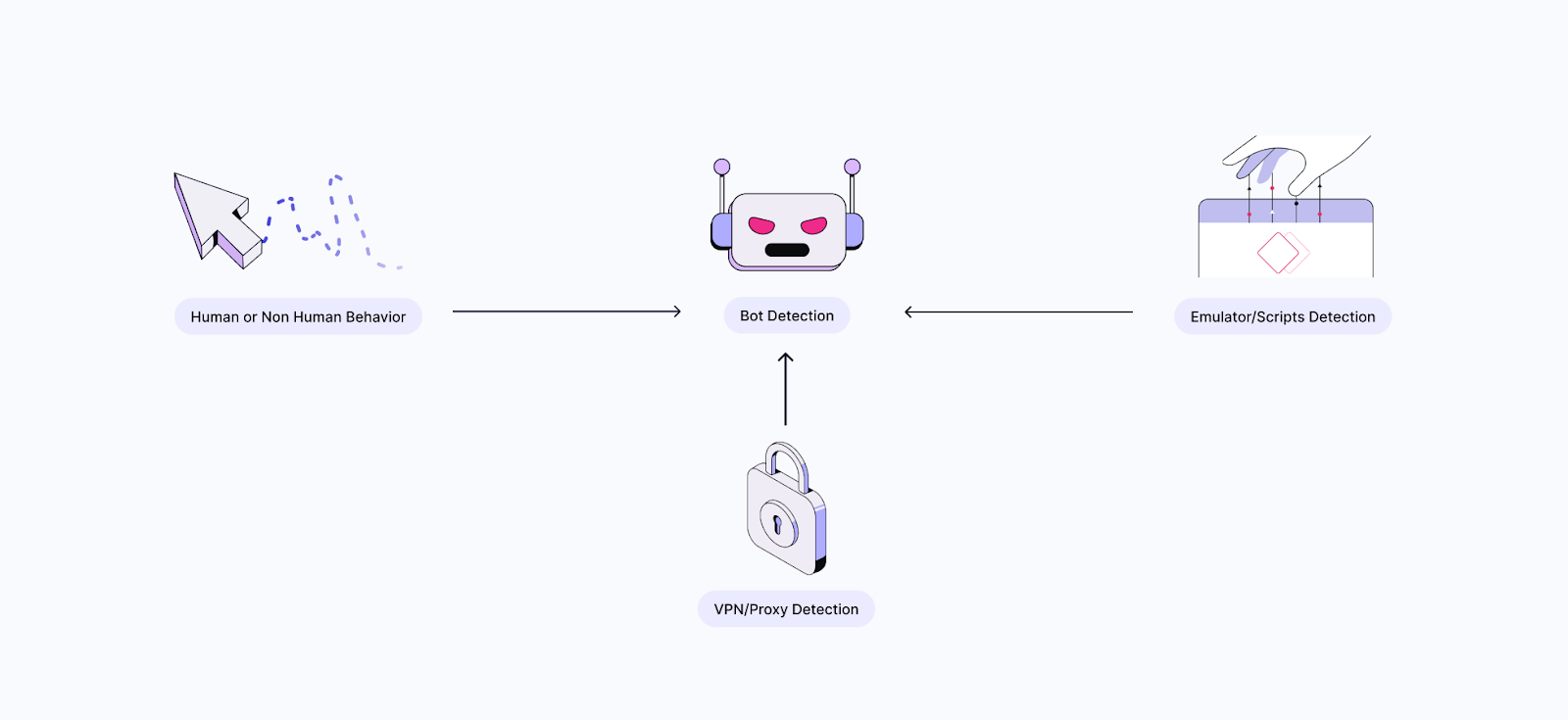
Automated systems have actually moved far beyond the basic text acknowledgment jobs of the early internet. In 2026, the barrier between human activity and device simulation has narrowed to a thin sliver of behavioral information. Many people remember the days of clicking squares including crosswalks or bikes, but those techniques are now relics. Modern security systems focus on how a user interacts with a page before they even see an obstacle. This shift represents an approach undetectable telemetry, where the objective is to identify bots without disrupting the user experience. Security companies now gather data on hardware acceleration, browser noise, and even the subtle inconsistencies in how a mouse cursor crosses a high-resolution display.
Static images used to be the main way to stop automatic scripts. This changed when neural networks became efficient adequate to parse distorted text and recognize things with higher precision than people. By the start of 2026, the industry moved towards vibrant behavioral analysis. This method does not look at what you are, but how you act. It measures the timing in between keystrokes and the velocity of scrolls. If a system identifies a level of accuracy that goes beyond human capability, it flags the session. Even the most advanced scripts battle to imitate the organic doubt and slight mistakes that specify human navigation.
Computer System Vision and Contextual Awareness in Modern Security
Optical Character Acknowledgment (OCR) has seen huge shifts in the last couple of years. In the past, OCR was about matching shapes to a library of known letters. Today, it involves deep semantic understanding. Difficulties in 2026 typically ask users to identify things based on context or logic rather than simple visual matching. A timely may ask to choose the item that would float in water or the animal that is out of place in a particular environment. These puzzles need a bot to not only see the images however to understand the physics and relationships between the objects illustrated.
Solvers have kept speed by utilizing larger designs that integrate multi-modal processing. These models can "read" a scene simply as a person does. They evaluate the relationship between pixels to figure out depth, lighting, and function. As these solvers end up being more common, security designers have turned to adversarial sound. This involves injecting data into images that is invisible to human beings but confuses the mathematical weights of an AI design. It develops a consistent cycle where vision models should be re-trained to disregard the noise while focusing on the real challenge.
Technical groups that focus on Asia Virtual Solutions V5 are seeing a rise in specialized hardware utilized for these jobs. In 2026, the expense of fixing a difficulty is as much about electrical power and processing power as it has to do with software application reasoning. When a website requires a complex sensible puzzle to be resolved, the bot operator must choose if the reward for bypassing the wall is worth the cost of the GPU cycles needed to run the solver. This economic friction has actually ended up being a central part of modern-day web defense.
Behavioral Biometrics and the Human Aspect
Among the most hard things for a device to replicate is the physical interaction with hardware. When a human moves a mouse, the path is never ever a straight line. There are micro-tremors, changes in velocity, and paths that follow a particular natural curve. Security systems in 2026 track these motions with severe granularity. They look for the "jitter" that takes place when a hand makes a fine change. If a cursor moves from point A to point B with a best mathematical curve, it is an immediate warning.
Mobile phone offer much more data points for confirmation. Accelerometer and gyroscope data can inform a security engine if the gadget is being held in a hand or sitting on a flat surface area. A bot running in a server farm can not easily fake the subtle tilting of a phone that occurs when an individual taps a button. Some advanced 2026 systems need the user to perform a physical gesture, like tilting the phone to move a virtual item into a target. This merges digital confirmation with physical reality, developing a high barrier for remote automated systems.
Experts who study Asia Virtual Solutions XEvil V5 Demo note that the biggest weak point in behavioral systems is the "recording" technique. Some bot operators tape-record real human sessions and replay them to pass these checks. To counter this, security engines now look for "entropy" in the behavior. If the very same mouse path is used two times throughout countless sessions, it is recognized as a replay attack. Every human movement is distinct, and 2026 systems are developed to find even the slightest hint of repetition.
The Function of Generative Designs in Automated Bypassing
The rise of generative AI has actually changed the nature of automated traffic. In 2026, bots do not just follow guidelines-- they create new habits on the fly. Artificial people are now used to interact with websites. These are AI agents created with "digital personalities" that consist of particular searching habits, interests, and even mistakes. They search news sites, check weather, and scroll through social networks before attempting to access a safeguarded location. This constructs a "reputation" for the session that makes it appear like a long-lasting human user.
This reputation-based security is a double-edged sword. While it stops new bots, it can likewise punish real individuals who use privacy-focused internet browsers or VPNs. When a user conceals their IP address and clears their cookies, they appear as a "brand-new" entity to the security engine. In 2026, the web has actually ended up being a place where having no history is almost as suspicious as having a history of bot activity. This has led to a push for decentralized identity tokens that prove "personhood" without revealing the user's real identity or browsing history.
Technical Breakdown of Logical Difficulties
Logic puzzles have actually changed the old "identify the bus" challenges in numerous high-security environments. These puzzles may include rotating 3D items to match a shadow or fixing a simple physics problem. Due to the fact that these jobs are tough to automate with a general script, they require a specialized model for every type of puzzle. The variety of these obstacles is their main strength. A website might alter its puzzle type every few hours, requiring bot operators to constantly upgrade their solvers.
We see a considerable quantity of research into "Human-in-the-Loop" (HITL) systems. When an AI solver is unsure of a difficulty, it passes the task to a human worker who resolves it in real-time. This hybrid approach enables automated systems to keep high success rates even against new security steps. The latency included in passing a difficulty to a human is frequently high enough for the security engine to notice. In 2026, speed is a signal of its own. If an obstacle is resolved too quickly, it's a bot; if it takes too long, it may be a human-assisted bot.
Personal privacy Concerns and the Cost of Verification
The amount of information gathered to verify a human in 2026 is shocking. Beyond simply mouse movements, systems can gather info about your screen resolution, set up fonts, battery level, and even the particular version of your graphics driver. This is referred to as "internet browser fingerprinting." While it works for stopping bots, it develops a massive trail of information that can be used to track people across different websites. Privacy supporters argue that the cost of a bot-free web need to not be the overall loss of anonymity.
Some regions have started to regulate the kinds of telemetry that security providers can collect. This has forced business to discover brand-new ways to validate users. One popular technique includes "Evidence of Work" (PoW) challenges. Instead of a puzzle, the browser is asked to fix a complex mathematical issue that takes a number of seconds of CPU time. This doesn't need any personal information, however it makes it very pricey for a bot to operate at scale. If every page load costs 5 seconds of processing power, a bot farm running countless sessions would need an enormous amount of hardware, making the operation unprofitable.
The Future of Human-Machine Interaction
Looking ahead, the line between human and maker will likely continue to blur. We are seeing the development of "relied on execution environments" on user gadgets. These are protected locations of a processor that can verify to a website that a genuine human is communicating with the device, without sharing any particular data about that individual. This could eventually change the requirement for obstacles completely. If the hardware itself can attest the user, the "difficulty and action" period of the web may finally pertain to an end.
For now, the arms race continues. Security companies establish a brand-new way to measure human behavior, and bot operators discover a way to replicate it. It is a consistent cycle of development and adjustment. The websites that stay the most safe and secure are those that use a layered method, integrating behavioral analysis, reputation scores, and sensible challenges. As we move through 2026, the focus stays on lowering the friction for genuine users while increasing the expense for automated scripts. The web of the future depends on this balance, making sure that services stay readily available to people while remaining secured from the sound of the machine world.
Every year, the tech moves even more into the background. The best confirmation system is the one you never ever see. By analyzing the quiet signals of a session, 2026 innovation aims to keep the digital world open and safe and secure. Whether it is through advanced OCR or deep behavioral tracking, the objective stays the exact same: ensuring that the individual on the other side of the screen is precisely who they declare to be. The complexity of these systems is a testament to the resourcefulness of both individuals developing the walls and those discovering methods to climb them.
Systems now use real-time threat scoring that changes based on worldwide traffic patterns. If a particular kind of bot is seen assaulting a site in one part of the world, the security network updates its models worldwide within seconds. This collective intelligence is the strongest defense against the quickly evolving world of automation. In this environment, staying still is the exact same as falling behind. Consistent updates to detection reasoning and puzzle range are the only way to preserve a protected digital border in 2026.