Automated Identity Management Systems for 2026

Your scraper still gets blocked. Because modern anti-bot systems do not rely on a single detection technique. This guide maps out every detection technique sites utilize today, from fundamental to advanced.
Let's go through them all. Anti-bot services maintain databases of known bad IPs: import httpx def check_ip_reputation(ip: str) -> dict: """Check if an IP is flagged in common databases.""" checks = # AbuseIPDB resp = ("", params= "ipAddress": ip, headers= "Key": ABUSEIPDB_KEY ). json() checks [" abuse_score"] = resp [" information"] [" abuseConfidenceScore"] # Inspect if datacenter IP checks [" is_datacenter"] = is_datacenter_ip(ip) return checks def is_datacenter_ip(ip: str) -> bool: """Check if IP belongs to a known hosting provider.""" import ipaddress DATACENTER_RANGES = [" 13.0.0.0/ 8", # AWS "34.0.0.0/ 8", # GCP "40.0.0.0/ 8", # Azure "104.16.0.0/ 12", # Cloudflare "157.240.0.0/ 16", # Meta] addr = ipaddress.ip _ address(ip) return any( addr in ipaddress.ip _ network(cidr) for cidr in DATACENTER_RANGES) Go into fullscreen mode Exit fullscreen mode Usage property proxies for delicate targets Turn IPs from different subnets Prevent datacenter IPs for websites with strict anti-bot Sites examine your IP's Autonomous System Number (ASN) to determine hosting suppliers: # What anti-bot services see: # AS7922 (Comcast) Residential # AS7018 (AT&T) Residential # AS16509 (Amazon/AWS) Datacenter # AS14061 (DigitalOcean) Datacenter # AS13335 (Cloudflare) CDN/VPN Get in fullscreen mode Exit fullscreen mode Every HTTP client has an unique TLS handshake signature: # Various customers, different finger prints: # Chrome 121: JA3 = 771,4865-4866-4867-49195 ...
curl: JA3 = 771,4865-4867-4866-49195 ... # Solution: curl_cffi mimics browser TLS from curl_cffi import requests resp = ("", impersonate="chrome120") # Now your JA3 matches Chrome 120 precisely Get in fullscreen mode Exit fullscreen mode Internet browsers send headers in a specific order. Python libraries do not: # Chrome sends: # Host, Connection, sec-ch-ua, sec-ch-ua-mobile, # sec-ch-ua-platform, Upgrade-Insecure-Requests, # User-Agent, Accept, Sec-Fetch-Site ...

Fix: utilize OrderedDict or curl_cffi headers = "Host": "", "Connection": "keep-alive", "sec-ch-ua": '"Chromium"; v="121"', "sec-ch-ua-mobile": "? 0", "sec-ch-ua-platform": '"Windows"', "Upgrade-Insecure-Requests": "1", "User-Agent": "Mozilla/5.0 ...", "Accept": "text/html, ...", Go into fullscreen mode Exit fullscreen mode HTTP/2 settings (SETTINGS frame, WINDOW_UPDATE, CONCERN) likewise produce a distinct finger print: # Chrome's HTTP/2 settings: # HEADER_TABLE_SIZE: 65536 # MAX_CONCURRENT_STREAMS: 1000 # INITIAL_WINDOW_SIZE: 6291456 # MAX_HEADER_LIST_SIZE: 262144 # Python's default: various values # Detectable # curl_cffi handles this instantly # when you utilize impersonate="chrome120" Get in fullscreen mode Exit fullscreen mode Websites render covert canvas aspects and hash the outcome:// What anti-bot JS does: const canvas = document.createElement('canvas'); const ctx = canvas.getContext('2d'); ctx.textBaseline="leading";="14px Arial"; ctx.fillText("Hey there, world!", 2, 2); const hash = canvas.toDataURL(). hashCode();// Various GPUs/drivers = different hash Enter fullscreen mode Exit fullscreen mode const gl = canvas.getContext('webgl'); const debugInfo = gl.getExtension( 'WEBGL_debug_renderer_info' );// Real internet browser: gl.getParameter(debugInfo.
The Future of Image Recognition in CAPTCHA Resolution
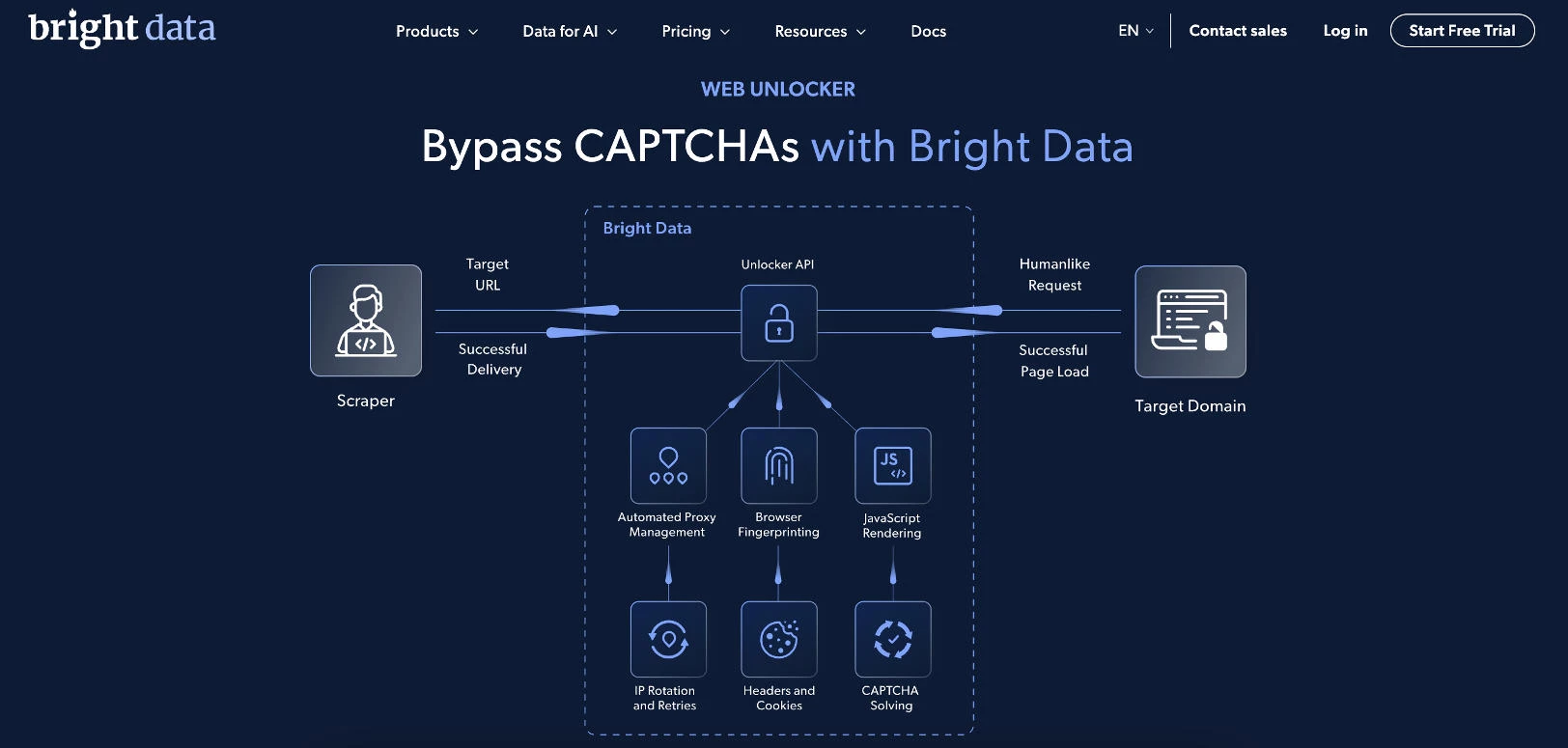
A lot of scrapers get obstructed at layers 3-4, not 5-7. repairing one layer while overlooking others will not work these catch 55% of bots before JS even runs but they're triggered by undetectable signals mouse motion and timing matter more each year usage bot detection sites to investigate your setup even perfect stealth can't avoid all challenges For managing the CAPTCHA layer when it activates, have a look at passxapi-python it provides a unified API for reCAPTCHA, hCaptcha, Turnstile, and FunCaptcha, so you can focus on the other layers.
In this tutorial, you will discover the following: What Cloudflare is. Top-level approaches to bypass Cloudflare. How to bypass the Cloudflare human check in Python.
XEvil proxiesIt uses an extensive suite of services designed to make sites faster and more safe., caching website material on an international network to improve load times and reduce latency.
Automated Access Management Workflows in 2026
By integrating with Cloudflare's network, websites can quickly get enhanced security and enhanced efficiency. This has actually made Cloudflare the go-to service for countless websites worldwide. Among the reasons that Cloudflare is so popular is its WAF (Web Application Firewall Program). This can be made it possible for on any web page served through its international network.
More specifically, the Cloudflare WAF beings in front of your web applications. It examines and filters inbound demands in real time to stop attacks or undesirable traffic before they reach your servers or gain access to your websites. As part of its multilayered defense method, the Cloudflare WAF utilizes proprietary algorithms to detect and block malicious bots.
It takes a look at details like the cipher suites provided, the order of negotiation, and other low-level qualities. Bots and non-standard customers frequently have uncommon, non-browser-like TLS signatures that provide them away.: Examines HTTP headers, cookies, user-agent strings, and other aspects. Bots often reuse default or suspicious configurations that vary from those utilized by real internet browsers.
This consists of the exact browser version, operating system, set up typefaces or extensions, and even subtle hardware characteristics. These data points form a fingerprint that helps identify real users from automated scripts.: Among the greatest signs of automated traffic is unnatural habits. Cloudflare screens patterns like rapid requests, absence of mouse movements, identical click courses, idle times, and more.
Cloudflare generally supplies 2 modes of human confirmation: Always reveal the human confirmation challenge Automated human confirmation difficulty (only when suspicious activity is found) Check out both choices below! The idea is to constantly require human verification on the first access to a site.
Advanced OCR Techniques for Bot Detection in 2026
Attempt visiting it in incognito mode (to make sure a fresh session without any cookies), and you will see a CAPTCHA called Cloudflare Turnstile, even if you are a real human user:: By the time you read this short article, StackOverflow's bot protection may have changed or be working in a different way. In this case, if you are developing an automated script, the only alternative is to automate the Gate CAPTCHA interaction in a human-like way.
In this mode, Cloudflare only provides an obstacle if it thinks a request might be from a bot., which runs undetectably in the internet browser to validate that the customer behaves like a genuine user: This process is seamless and typically completes instantly if you are a human utilizing a regular web browser.
Since this triggers minimal disruption for routine users, it is without a doubt the most common Cloudflare mode. If the JavaScript difficulty fails (meaning Cloudflare concludes the customer is most likely to be a bot), it will intensify to showing a Turnstile CAPTCHA for human confirmation: Now, you are back to what you saw in the previous situation.
Mastering Advanced Masking and Web Automation
This page is safeguarded by the Cloudflare WAF, so the automated JavaScript-based verification process will instantly begin. In the background, a series of POST demands are exchanged with Cloudflare's endpoints, transferring encrypted data within their payloads: The specific contents of these payloads are not openly documented.